Sleep Hygiene Guide: Science-Backed Tips for Better Rest
Sleep hygiene is a set of practices and routines that help you achieve better quality rest. By aligning your daily habits with your body's natural circadian rhythm and creating optimal sleeping conditions, you can improve sleep quality, boost energy levels, and enhance overall health. Learn evidence-based strategies from leading sleep researchers and health institutions.
😴 1. Understand Sleep Hygiene Fundamentals
According to Harvard Health, sleep hygiene is "a set of practices and routines that help you get better sleep." Unlike sleep disorders requiring medical treatment, poor sleep hygiene is something you can actively improve through behavioral and environmental changes.
Sleep hygiene works by supporting your body's natural sleep-wake cycle, called the circadian rhythm. This 24-hour biological cycle regulates hormone production (including melatonin), body temperature, and alertness. When your daily habits align with this rhythm, sleep comes more naturally and feels more restorative.
The Science Behind Sleep
Quality sleep requires progression through distinct sleep stages: light sleep (stages 1-2), deep sleep (stage 3), and REM sleep (rapid eye movement). A complete sleep cycle lasts about 90 minutes, and adults need 4-6 cycles nightly for optimal health. Poor sleep hygiene interrupts these cycles, reducing sleep quality even if you're in bed for 8 hours.
Why Sleep Matters
- Cognitive function: Sleep improves memory consolidation, learning, and problem-solving ability
- Physical health: Sleep supports immune function, wound healing, and metabolic regulation
- Emotional regulation: Adequate sleep improves mood and stress resilience
- Performance: Well-rested people have better focus, reaction time, and productivity
- Disease prevention: Chronic sleep deprivation increases risk of heart disease, diabetes, and obesity
🔄 2. Optimize Your Sleep Schedule and Circadian Rhythm
Your circadian rhythm is your body's internal clock, synchronized to the 24-hour day-night cycle. Aligning your sleep schedule with this rhythm makes falling asleep and waking easier, and improves sleep quality significantly.
Establishing Consistent Sleep Times
The most important sleep hygiene practice is maintaining a consistent sleep and wake schedule every day—including weekends. This trains your circadian rhythm to anticipate sleep at a specific time, making sleep initiation more natural.
- Pick a target bedtime: Choose a time that allows 7-9 hours sleep before your required wake time
- Stick to it: Go to bed and wake up at the same time daily, within 30 minutes, even on weekends
- Gradual adjustments: If changing sleep times, shift by 15 minutes every few days rather than dramatic changes
- Weekend compromise: Sleeping 1-2 hours later on weekends is acceptable, but avoid major schedule shifts
Light Exposure and Circadian Alignment
Light is the most powerful circadian rhythm regulator. Natural light exposure synchronizes your body clock and regulates melatonin production. Sleep Foundation research shows morning light exposure is critical for proper circadian function.
- Morning light (first 30-60 minutes after waking): Get bright light exposure to set your circadian rhythm. Natural sunlight is ideal, but bright artificial light works
- Throughout the day: Spend time in bright light during daylight hours to promote daytime alertness
- Evening light reduction: As evening approaches, dim indoor lights to support melatonin production
- Blue light avoidance: Limit artificial light exposure 30-60 minutes before bed, especially blue light from screens
🛏️ 3. Create Your Ideal Sleep Environment
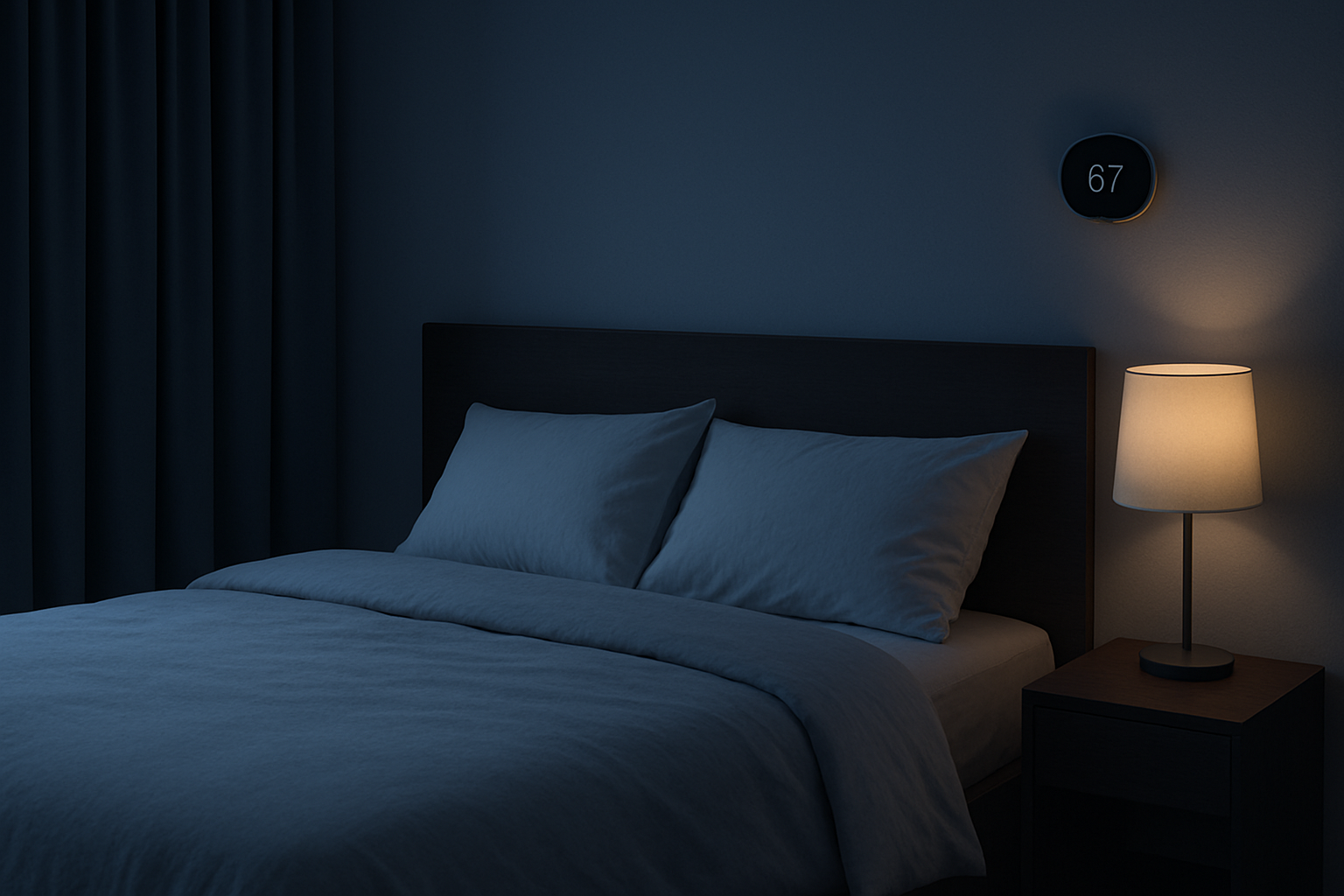
Your bedroom environment dramatically affects sleep quality. A well-designed sleep space supports your body's natural sleep processes and helps you fall asleep faster and sleep more deeply.
Temperature Control
Body temperature naturally drops during sleep. According to sleep research, a cooler environment supports this natural thermoregulation and promotes better sleep. Research in the Journal of Physiological Anthropology shows thermal comfort is crucial for sleep quality.
- Ideal room temperature: 65-68°F (18-20°C) for most people
- Individual variation: Some people sleep better slightly cooler or warmer—find your optimal temperature
- Bedding adjustments: Use appropriate blankets and sleepwear for the season to maintain comfort
- Humidity consideration: Maintain moderate humidity (30-50%). Excessive humidity disrupts sleep and increases allergens
Darkness and Light Control
Darkness triggers melatonin production, your body's sleep hormone. A completely dark bedroom is essential for quality sleep.
- Blackout curtains or shades: Block external light sources completely
- Remove light sources: Cover or remove clock displays, phone lights, and electronic indicators
- Eye mask option: If blackout isn't possible, a comfortable eye mask is an effective alternative
- Night light consideration: If you need minimal light, use red or amber lights (which don't suppress melatonin) rather than white or blue
Sound Management
Noise disruptions fragment sleep and prevent deep sleep progression. Create a quiet sleep environment through elimination or masking of sound.
- Remove noise sources: Close windows, use weatherstripping, and eliminate electronic beeping or notifications
- Earplugs: Comfortable foam or silicone earplugs block external noise effectively
- White noise: For some people, consistent background noise (white noise machine, fan, or apps) masks disruptive sounds
- Mattress and pillows: Ensure your bedding doesn't creak or squeak during movement
Bed Use and Association
Reserve your bed primarily for sleep and intimacy. This creates a strong psychological association between your bed and sleep, making it easier to fall asleep when you lie down.
- Avoid work in bed: Don't use your bed for work, eating, or screen time
- Avoid clock-watching: Keep your alarm clock out of view to prevent anxiety about time
- No phone in bed: Leave your phone outside the bedroom if possible
- Comfortable bedding: Invest in quality mattress, pillows, and sheets that support sleep
🌙 4. Develop a Bedtime Routine
A consistent bedtime routine signals to your body that sleep is approaching, allowing it to transition from wakefulness to sleep naturally. According to sleep experts, a 30-60 minute wind-down period before bed significantly improves sleep quality.
The Pre-Sleep Wind-Down Period (30-60 minutes before bed)
Gradually decrease mental and physical stimulation before sleep to prepare your nervous system for rest.
- Stop work and stressful activities: Finish work, checking email, and engaging conversations at least 1-2 hours before bed
- No screens (30-60 minutes before bed): Blue light from phones, tablets, and computers suppresses melatonin. Use blue light filters or stop screen use entirely
- Dim the lights: Gradually lower light levels in your home to support natural melatonin production
- Lower room temperature: Begin cooling your bedroom an hour before bed
Relaxation Techniques
Incorporate calming activities into your bedtime routine to signal your body it's time to sleep:
- Reading: Physical books or e-readers with warm light. Choose relaxing, non-stimulating content
- Warm bath or shower: The temperature drop afterward promotes sleepiness. Bathe 1-2 hours before bed for best effect
- Meditation or mindfulness: Even 5-10 minutes of focused breathing or body scan meditation reduces anxiety and promotes sleep
- Stretching or gentle yoga: Light stretching reduces physical tension without significant stimulation
- Progressive muscle relaxation: Systematically tense and release muscle groups to reduce tension
- Journaling: Write down thoughts, worries, or tomorrow's tasks to clear your mind
- Calming music or nature sounds: Soft music or nature soundscapes promote relaxation without being stimulating
What to Avoid Before Bed
- Large meals: Eat dinner at least 3 hours before bed. Digestion can interfere with sleep
- Alcohol: While alcohol might make you drowsy initially, it disrupts sleep architecture and reduces sleep quality
- Nicotine: A stimulant that delays sleep onset and disrupts sleep
- Intense exercise: Vigorous exercise within 3 hours of bed raises body temperature and alertness
- Caffeine: Stop caffeine intake by mid-afternoon (caffeine half-life is 5-6 hours)
☀️ 5. Daytime Habits That Support Sleep
Sleep isn't just about nighttime—your daytime choices significantly impact nighttime sleep quality. Establishing consistent healthy daytime habits improves sleep initiation and quality.
Timing of Meals and Beverages
- Caffeine cutoff: Limit caffeine intake to before 2 PM. Coffee, tea, chocolate, and sodas contain caffeine
- Meal timing: Eat dinner 3+ hours before bed. A light snack 1-2 hours before bed is acceptable if needed
- Hydration: Drink water throughout the day, but taper fluid intake in evening to avoid nighttime bathroom trips
- Alcohol: Avoid alcohol in the evening, as it disrupts sleep even if it aids sleep onset
Exercise and Physical Activity
Regular exercise improves sleep quality, but timing matters. Harvard Health recommends aerobic exercise improves sleep, but not close to bedtime.
- Frequency: Aim for 150 minutes moderate-intensity exercise weekly, spread across multiple days
- Timing: Exercise during morning or afternoon (at least 3+ hours before bed)
- Avoid evening workouts: Intense exercise raises heart rate and body temperature, interfering with sleep
- Type: Both aerobic exercise (running, cycling) and resistance training improve sleep
Managing Naps
- Nap duration: Keep naps to 20-30 minutes maximum. Longer naps cause grogginess
- Nap timing: Nap before 3 PM to avoid interfering with nighttime sleep
- Limit frequency: Occasional naps are fine, but daily napping may indicate insufficient nighttime sleep
- Avoid when sleep-deprived: If struggling with nighttime sleep, avoid napping entirely
Stress Management
Stress and anxiety are major sleep disruptors. Develop strategies to manage stress throughout the day:
- Daytime meditation: Even 10 minutes daily reduces overall stress and anxiety
- Regular exercise: Physical activity is one of the most effective stress reduction methods
- Social connection: Spend time with friends and family to reduce stress
- Time in nature: Outdoor time reduces stress and anxiety
- Breathing techniques: Practice deep breathing during stressful moments
🚨 6. When to Seek Professional Help
Sleep hygiene improvements work best for people with mild sleep problems. If you experience persistent sleep issues despite implementing good sleep habits, consult a healthcare provider.
Signs You May Need Professional Help
- Difficulty falling asleep lasting more than a few weeks despite good sleep hygiene
- Frequent nighttime awakenings or inability to stay asleep
- Excessive daytime sleepiness that interferes with daily functioning
- Loud snoring or pauses in breathing during sleep (signs of sleep apnea)
- Leg movements or restlessness during sleep (restless leg syndrome)
- Vivid nightmares or sleep paralysis
Available Treatments
If sleep hygiene alone doesn't solve your sleep problems, professionals can offer:
- Cognitive behavioral therapy for insomnia (CBT-I): Evidence-based psychological treatment, often more effective than medication
- Sleep studies: Can diagnose conditions like sleep apnea or restless leg syndrome
- Medical evaluation: Sleep problems sometimes indicate underlying health conditions
- Medication: When appropriate, under medical supervision
📊 7. Tracking and Adjusting Your Sleep
Sleep Diary
According to sleep experts, keeping a sleep diary helps identify patterns and barriers to good sleep. Track:
- Bedtime and wake time
- Time to fall asleep (sleep latency)
- Number and duration of nighttime awakenings
- Sleep quality rating (1-10 scale)
- Daytime activities, meals, caffeine, and exercise timing
- Stress levels and mood
Optimization Timeline
- Week 1-2: Establish consistent sleep schedule and bedtime routine
- Week 2-3: Optimize your sleep environment (temperature, darkness, quiet)
- Week 3-4: Refine daytime habits (caffeine timing, exercise, meals)
- Week 4+: Monitor improvements and adjust as needed. Benefits increase over time
Most people see significant sleep improvement within 2-4 weeks of implementing consistent sleep hygiene practices. Remember that sleep needs vary individually—some people thrive on 7 hours while others need 9. Listen to your body and adjust accordingly.